Disagree with your WOZ value? Here is how to object within six weeks, check the taxatieverslag, use valid arguments, and understand which taxes a lower WOZ value reduces.
WOZ Value Objection: The 10 Most Frequently Asked Questions About Appealing
JH
10 minutes to read Last updated August 25, 2026
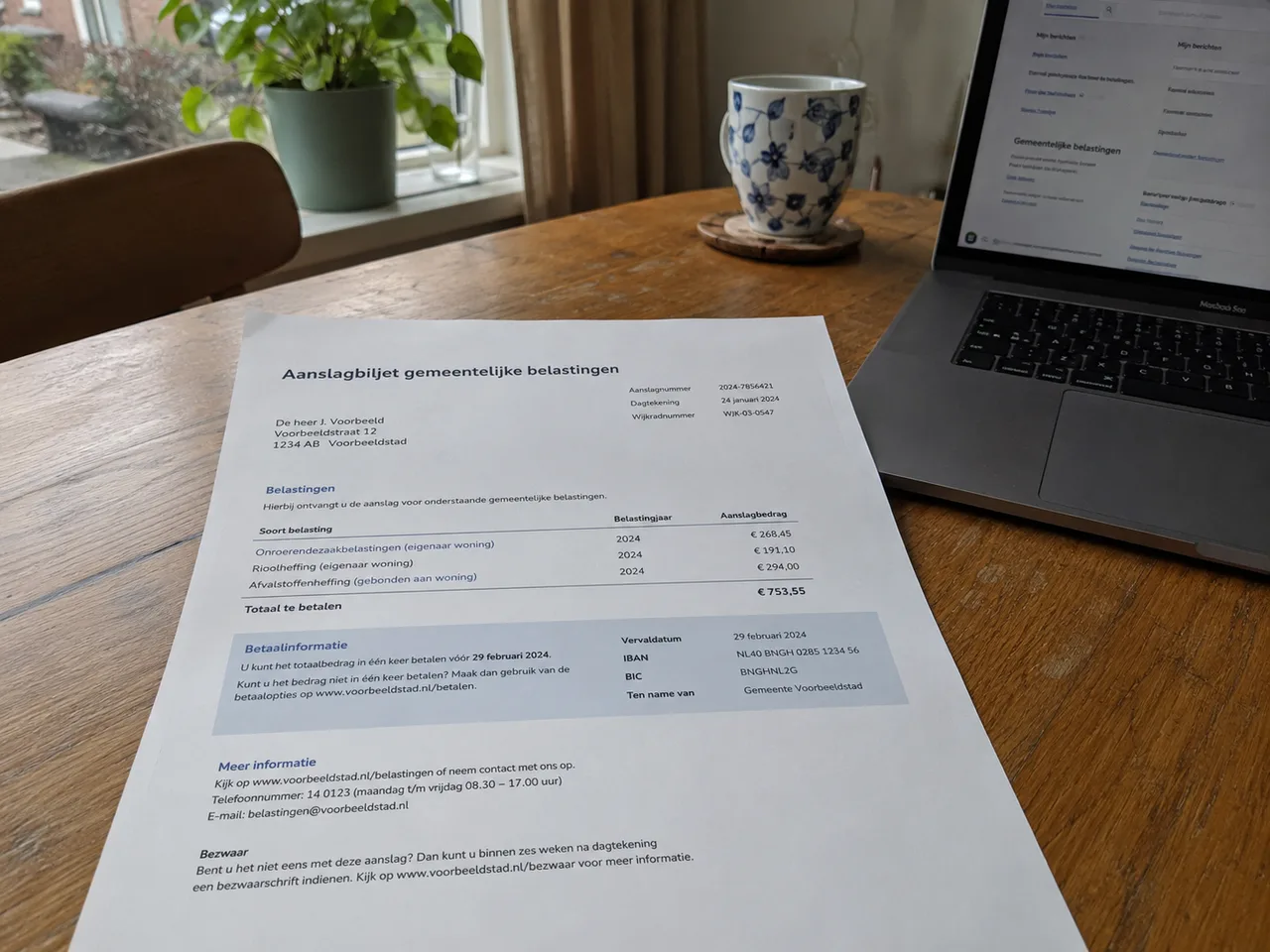
A WOZ objection (bezwaar tegen de WOZ-waarde) is a formal request asking your municipality to correct the value it assigned to your home. You have six weeks from the date on the WOZ decision to file one, in writing or online, and you can do it yourself at no cost.
Key takeaways
- You have six weeks from the date on your WOZ decision to object, in writing or online, and you can do it yourself for free (Waarderingskamer).
- The WOZ value published in 2026 is based on the waardepeildatum of 1 January 2025; the value always runs one year behind.
- Check the taxatieverslag (assessment report) first: it shows the comparable sales the municipality used, and most errors hide in that data.
- A lower WOZ value reduces several taxes at once, including OZB and the eigenwoningforfait (Rijksoverheid).
- Miss the six-week window and the value is in principle fixed, unless it would need to drop by 20% or more.
How do you appeal a WOZ value in the Netherlands?
According to the Waarderingskamer, the national body that supervises WOZ quality, you file an objection (bezwaar) directly with your municipality, by letter or online through a WOZ portal or a DigiD login. You have six weeks from the date printed on your WOZ decision, the aanslagbiljet, and you can handle it yourself at no cost. The notice has to say why you disagree; you cannot object without a reason, so the municipality needs to understand which facts about your home it got wrong. That is where the work sits. Walter's approach starts one step earlier, with understanding what your home is genuinely worth, independent of any single official number. Once you can explain the gap between the WOZ value and the market, your objection stops being a complaint and becomes an argument. Curious what a WOZ value actually is first? Read our explainer on the WOZ value.
How does the municipality determine your WOZ value?
The WOZ value published in 2026 rests on a valuation reference date, the waardepeildatum, of 1 January 2025: the value always runs one year behind the year it applies to. Municipalities do not send an appraiser to every home. Instead they use modelmatige waardebepaling, an automated model that compares your home against comparable sold properties and derives which characteristics drive value. That method is efficient across hundreds of thousands of homes, but it is not precise for your specific address. It can miss overdue maintenance, an awkward layout, or a feature the model never recorded. Honestly: until you compare the model's assumptions against the real state of your home, you cannot know whether the number is fair. That is why understanding what actually determines the value of a house matters more than reacting to the headline figure.
How do you check whether your WOZ value is correct?
Everyone who receives a WOZ value can view the taxatieverslag (assessment report) online after logging in with DigiD on MijnOverheid.nl or through the municipality's own portal, or request it in writing (Waarderingskamer). The report shows the sales figures of the comparable properties the municipality used to set your value, so this is your evidence base. Compare those reference homes against yours: are they really similar in size, condition, location and build year? A reference home that sold for a high price but has a renovated kitchen yours does not have is not a fair comparison. Read the recorded surface area and object characteristics too, because a wrong gebruiksoppervlakte is one of the most common and most fixable errors. When the data behind the value is wrong, your objection almost writes itself. Our guides to the appraisal report and to determining a property's true value show what a solid value picture looks like.
Want a market-based value picture to hold next to the municipality's number? A free Walter report for your address gives you an independent read on what your home is worth, built on ten years of housing data, so you can see the gap for yourself.
What arguments can you use to object to a WOZ value?
The taxatieverslag from the Waarderingskamer points you to the arguments that actually count: anything that makes your home worth less than the comparable homes used to value it. Common, defensible arguments include:
- View and surroundings: loss of an open view, shade, or a small or north-facing garden
- Nuisance: nearby restaurants, a busy road, or ongoing construction next door
- Overdue maintenance or damage: an outdated condition, structural defects, an old cv-ketel (central heating boiler)
- Restrictions: monument status, archaeological limits, or permit constraints
Each situation is unique, so check which apply to your home specifically and back them with the comparable-sales logic a valuation rests on.
A tax model and a market model ask different questions. You can't argue with a number using a feeling. You argue with it using a better number.
Marcel de Graaf, CTO & Co-founder Walter Living
Which taxes depend on the WOZ value?
According to the Rijksoverheid, the WOZ value is the basis for a whole set of taxes, which is exactly why a value that is too high costs you money across several bills at once. The Belastingdienst uses it for income tax (the eigenwoningforfait), corporate income tax (vennootschapsbelasting), gift tax (schenkbelasting) and inheritance tax (erfbelasting). Municipalities use it for the property tax (OZB), and water authorities use it for the watersysteemheffing. A lower WOZ value reduces several of these at once, though a low value has trade-offs of its own, as we set out in the advantages and disadvantages of a low WOZ value. So the question is not only whether your value is too high, but which of your bills this number actually touches. That is the calculation worth making before you decide to object.
Can your WOZ value go up after you object?
Under the Wet WOZ, an objection is about the fiscal value of your home, not about how much you could sell it for or borrow against it. In practice a higher mortgage offer or a strong sale price is not a valid argument, because those are not fiscal grounds. A renovation that raised your home's value is normally picked up in the following year's valuation, not retroactively through your objection. The common worry is that objecting could backfire and push your value up, and the fiscal framing of the procedure is why that concern is usually misplaced. Still, the exact handling can differ per municipality, so read your decision carefully and, if in doubt, ask the municipal tax department directly before you file. For the flip side, when a higher number can work in your favour, see what a WOZ value is and when you need it.
What can you do if the municipality rejects your objection?
If you disagree with the municipality's ruling on your objection, you can appeal to the district court (rechtbank) within six weeks of that ruling (Rijksoverheid). The appeal, called a beroepschrift, must be filed within those six weeks and state at least your name and address and the decision you are appealing (Waarderingskamer). Going to court sounds heavy, but it is a normal, accessible step in the WOZ process. Before it comes to that, keep the informal route in mind: many small errors, a wrong surface area or a mistaken build year, can often be fixed with a phone call or email to the municipal tax department, without any formal procedure. The formal appeal is there for a genuine disagreement about the value, not for data typos the municipality would correct anyway. If you are still weighing whether it is worth it, our overview of the WOZ value and its uses helps.
What happens if you object too late?
The Waarderingskamer is clear: if your objection arrives later than six weeks after the date on your decision, the WOZ value is in principle fixed and the municipality will not process a late objection. There is one important exception. If the municipality still finds the value too high and it would need to come down by 20% or more, it must lower it anyway, a correction called ambtshalve vermindering. Below that 20% threshold, a late objection generally gets you nowhere, so the six-week window genuinely matters. The practical takeaway: the day your WOZ decision lands, check it, compare it against your home and the market, and act inside the six weeks. Waiting is the one mistake that closes almost every door. When you check, start from a clear read on the WOZ value so you know what a fair number looks like.
A WOZ objection is not about fighting the municipality; it is about matching an automated number to the real value of your home. The right value is the one that is logical within a clear framework of comparable homes and real market data, not a figure you accept simply because it arrived on official paper. That is the same principle whether you are checking a tax value or weighing a bid: rationality in an emotional process, so you act on insight instead of guessing.
Start with the number. Pull a free Walter report for your address to see an independent, data-based value estimate, then hold it next to your WOZ decision and the taxatieverslag. If the gap is real, you now have the beginning of an argument.
Also asked
Does it pay to object to a WOZ value?
That depends on your situation, not on a general rule. Because the WOZ value is the basis for several taxes, a value that is set too high means you pay too much across OZB, the eigenwoningforfait and more (Rijksoverheid). If your home is genuinely worth less than the value suggests, objecting can be worth it, and filing it yourself costs nothing.
Can I object to a WOZ value myself?
Yes, and most people can. You submit a written or online notice of objection to your municipality within six weeks of the date on your decision (Waarderingskamer). You can do it yourself or ask an external party to help. The key is a clear reason and evidence, usually drawn from the taxatieverslag.
I became a homeowner this year. Can I still object to the WOZ value?
Generally yes, but the route is slightly different. If you buy a home during the year, you can request a WOZ value from the municipality and receive a fresh decision (beschikking). If you disagree with that decision, you can object within the usual six-week window. Check your municipality's portal for the exact steps.
What is the waardepeildatum for the 2026 WOZ value?
It always runs a year behind, which surprises people. The WOZ value published in 2026 is based on the waardepeildatum of 1 January 2025 (Waarderingskamer). So the number reflects the estimated market value on that date, not today's market, which is worth remembering when you compare it against recent sale prices.
Buying a house
View all Buying a house
Is it time to buy or keep renting for a while? Here are the pros and cons
Buying a house is a big step, especially if you are entering the housing market for the first time. For beginners, buying a home is often still a distant thought, partly because there are quite a few one-time costs involved in purchasing a home.
Steven van Wel
9 minutes to read