Foundation risk can cost tens of thousands to repair and quietly lowers what a home is worth. Here is what the A–E risk class means, what changed in the 2026 appraisal report, and how to check before you bid.
Foundation Risk: What It Is and How to Spot It Before You Bid
SW
10 minutes to read Last updated October 19, 2026
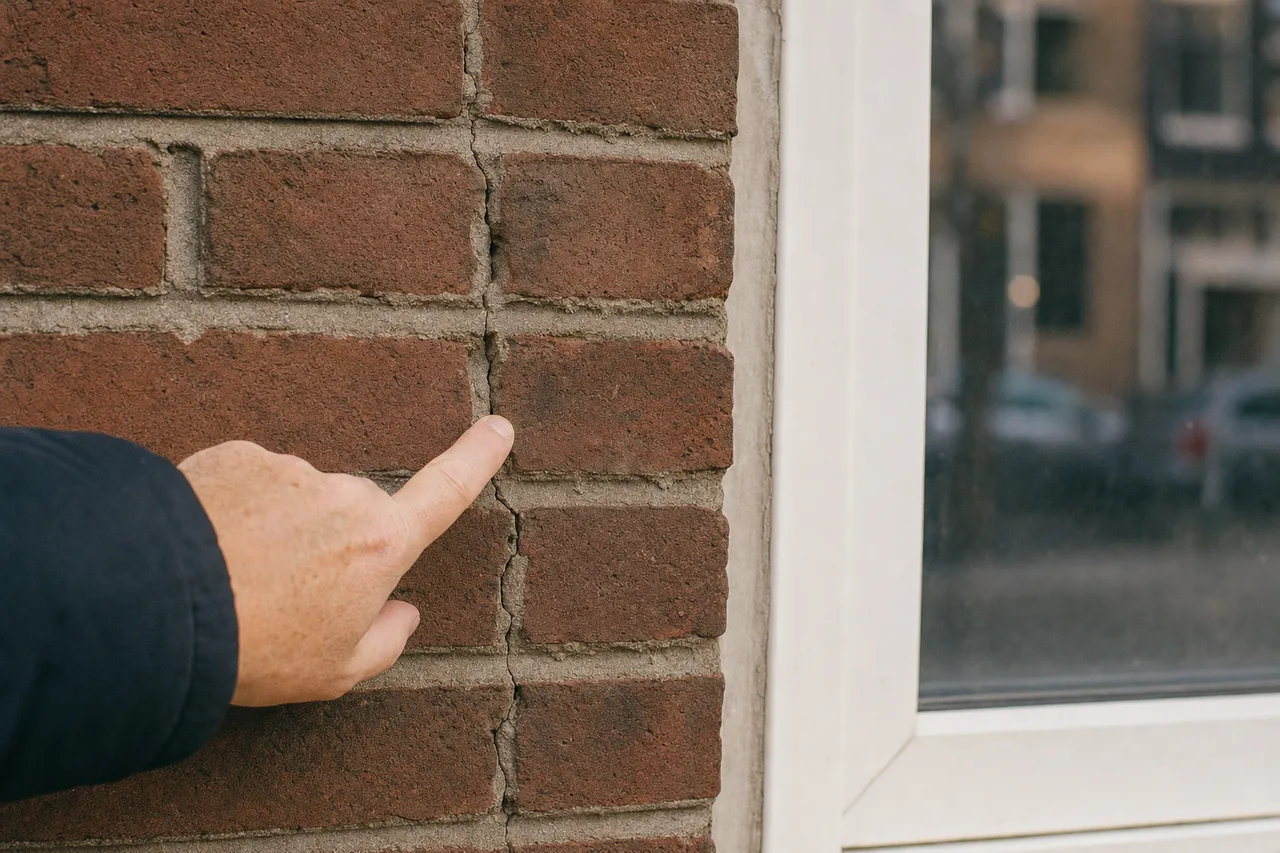
Foundation risk is the chance that a home's foundation has reduced load-bearing capacity without visible damage yet, for example through paalrot (rotting wooden piles). It can cost tens of thousands to repair, so it shapes what a home is worth and what bid is sensible. Understand the home's value before you bid.
Key takeaways
- Foundation risk is the chance a foundation is weaker than expected with no visible signs, mainly in older homes on peat and clay soil.
- According to the Rijksoverheid (August 2026), up to 425,000 buildings could have foundation damage in the coming years, rising to 780,000 within 25 years.
- Since 1 April 2026, foundation risk is a standard part of the appraisal report (a new model built with banks, NHG, NRVT, NVM and Vastgoed Nederland); a survey is only needed when the risk is high.
- The A–E risk class (KCAF) runs from A (no risk) to E (an established problem); D is the threshold for further investigation.
- Walter's foundation risk is an indicative estimate from public data, before your bid, not a survey or a replacement for the appraisal.
What is foundation risk in a home?
According to the Waarderingskamer, the Dutch body for property valuation standards, foundation risk exists when a home shows no visible damage yet, but the foundation turns out to have reduced load-bearing capacity, for example through paalrot (the rotting of wooden foundation piles). That distinction matters. Foundation risk is not confirmed damage, it is the chance that something is going on below ground that you cannot see during a viewing. It touches value directly, because a home with a real foundation risk is worth less than an identical home without it, since the buyer has to reckon with possible repair costs. For you as a buyer it is not a technical footnote but part of your bidding strategy. Our guide on what determines the value of a house explains how these factors feed into value, and what to look out for during a viewing shows the signals you can already spot yourself.
What do foundation codes like code 1 and code 2 mean?
Two different systems use the word "code", and mixing them up is easy. The national standard today is the A–E foundation risk class used in the NRVT/NWWI model appraisal report: according to the KCAF (Kenniscentrum Aanpak Funderingsproblematiek), A means no risk, B light risk, C a raised risk or uncertainty, D high risk where further investigation is appropriate, and E an established foundation problem. Separately, some municipalities such as Amsterdam use their own numbered foundation codes (code 1, code 2, and up) in specific procedures like splitting a building into apartments. Those municipal codes are a local classification and are not the same as the A–E risk class an appraiser now records. If you come across a numeric foundation code on a listing, ask the selling agent or the municipality which system it refers to, because the meaning depends entirely on the source. For a value picture, the A–E class is what feeds the appraisal.
How do you know if a house has foundation risk?
Certain features predict foundation risk before any expert inspects. According to the RVO (Rijksdienst voor Ondernemend Nederland), homes built before roughly 1970 were often founded on wooden piles, and those are vulnerable: fungi attack the wood during droogstand (when the water table drops and piles dry out), bacteria cause palenpest (rot that continues even under water), and negatieve kleef (downward drag) pulls piles down as the soil settles. In areas with soft peat and clay soil those risks stack up. So watch the combination of an old construction year and a peat or clay subsoil, because those two together explain most of the risk. Visible signals include cracks in facades, sticking doors and sloping floors, though these can have other causes too. To be sure, a building inspection and, if needed, a targeted foundation survey give you a technical read. Our checklist on one-off costs when buying helps you budget for what may follow.
Create a free Walter account and see a home's foundation risk before you put a bid on paper.
Is a foundation survey mandatory since 1 April 2026?
Not for every home. Since 1 April 2026, the appraisal report states whether a home runs a risk of foundation damage, and according to the Rijksoverheid further investigation is only needed when that risk is high. So a survey is triggered by a high-risk finding, not applied automatically. The report itself changed too: the NHG explains that a new model Taxatierapport Woonruimte was introduced on 1 April 2026, built together with banks and other lenders, NHG, the NRVT, NVM and Vastgoed Nederland, and it now carries concrete information about foundation risk. Honestly: until this rule took effect, foundation risk stayed invisible in many purchases until it was too late, because a standard appraisal did not look at it explicitly. The catch is timing. An appraisal appears only when you arrange the mortgage, so after your bid. The official judgment stays the appraiser's work, validated through an institute like the NWWI (Nederlands Woning Waarde Instituut). Read why you need an appraisal report to see where it fits.
What is a phase 1 foundation survey?
According to the NRBI (Nederlands Register Bouwkundig Inspecteurs), a phase 0 survey or QuickScan is the first step: a quick desk and site check of whether the foundation deserves concern. Follow-up research, phase 1 or phase 2, becomes necessary when there is doubt about the load-bearing capacity, a suspicion of paalrot or other attack, a legal or insurance question, or a planned structural alteration. A phase 1 survey goes deeper and can consist of soundings (soil measurements), a physical foundation inspection, and calculations of the remaining capacity. That is the level of detail that turns an indicative risk signal into a concrete verdict. Costs vary with the method and the home, so treat quoted prices as a starting point and ask the inspector what the scope covers. You can also make a foundation survey a resolutive condition in your offer, the escape clause that lets you step back; our guide on the most common resolutive conditions explains how.
What does foundation repair cost and what does it mean for your bid?
Foundation repair is one of the biggest costs a home can hide, and the scale is large. According to the Rijksoverheid (August 2026), the number of buildings with foundation damage could rise to 425,000 in the coming years and grow to 780,000 within 25 years. The KCAF notes that indicative repair costs only appear in the appraisal report at risk class D or E, with an established or derived reliability; for an exact figure you need a specialist foundation survey, and repair can run into tens of thousands of euros. What that means for your bid depends on the class. At low risk (class A or B) it probably plays no role. At high risk (class D or E) it is wise to weigh the possible repair costs, because they can reshape your budget. That is not a reason to walk away, it is a reason to calculate. Sometimes the best choice is: not to bid, and sometimes it becomes a negotiation point you ground your offer with. Read how to approach making a strong offer on a popular home and how to know why you're bidding. The Fonds Duurzaam Funderingsherstel and knowledge centre KCAF help owners further with repair.
How does Walter's foundation risk estimate work?
Walter's foundation risk is an indicative estimate per address, built only from public national data: postcode data, soil-type estimates, the BAG construction year (from the Basisregistratie Adressen en Gebouwen) and 3D building data. It reads as three parts. The risk class (A–E) shows vulnerability from low to high. The reliability level tells you how hard the estimate is: Model (purely calculated), Derived (partly substantiated) or Established (based on known data). The recommendation translates that into an action: no action, monitor, or investigate. Underneath, Walter weighs four risk factors: paalrot, settlement, negatieve kleef and palenpest. What it is not matters as much as what it is: it is not a foundation survey and not the official appraisal verdict, but a first read on whether the foundation deserves attention, the kind of input that helps you with determining the property's true value. Walter doesn't gamble. Walter explains. Create a free Walter account to see the foundation risk of your target home before you bid, then you decide whether a survey is worth it.
This article is informational and not financial advice under the Wft; for personal mortgage or valuation advice, consult an AFM-registered adviser.
Veelgestelde vragen
What is foundation risk in a home?
It is a chance, not a fact. Foundation risk means a foundation may be losing load-bearing capacity without any visible damage yet, for example through paalrot after a drop in the water table (Waarderingskamer). That raises the chance the foundation lasts less long than expected, or that costly repair becomes necessary. For buyers it matters because the risk can lower the home's value and change what bid is sensible.
What does foundation code 2 mean?
It depends on which system you are reading. Municipalities like Amsterdam use their own numbered foundation codes (1, 2, and up) in specific procedures such as splitting a building into apartments, and the exact meaning is set locally. The national standard in appraisal reports is the separate A–E risk class (KCAF). If you see a numeric code, ask the municipality or selling agent which system it refers to.
Is a foundation survey mandatory since 1 April 2026?
Not automatically. Since 1 April 2026 the appraisal report states whether a home runs a foundation-damage risk, and according to the Rijksoverheid further investigation is only needed when that risk is high. The NHG confirms the new model Taxatierapport Woonruimte now carries concrete foundation-risk information. That judgment arrives with the mortgage application, so after your bid.
What does a phase 1 foundation survey cost?
Treat any quoted price as a starting point. According to the NRBI, a phase 1 survey follows the QuickScan (phase 0) when there is doubt about capacity or a suspicion of paalrot, and can include soundings, a physical inspection and calculations. Cost varies with method and home, so ask the inspector exactly what the scope covers before you commit.
Can I still bid on a home with foundation risk?
Yes. Foundation risk is not a reason to automatically walk away, it is a reason to calculate. At high risk (class D or E) you weigh the possible repair costs, which can run into tens of thousands (KCAF), or make it a negotiation point. Sometimes the outcome is that you do not bid, sometimes that you proceed with a well-grounded offer.